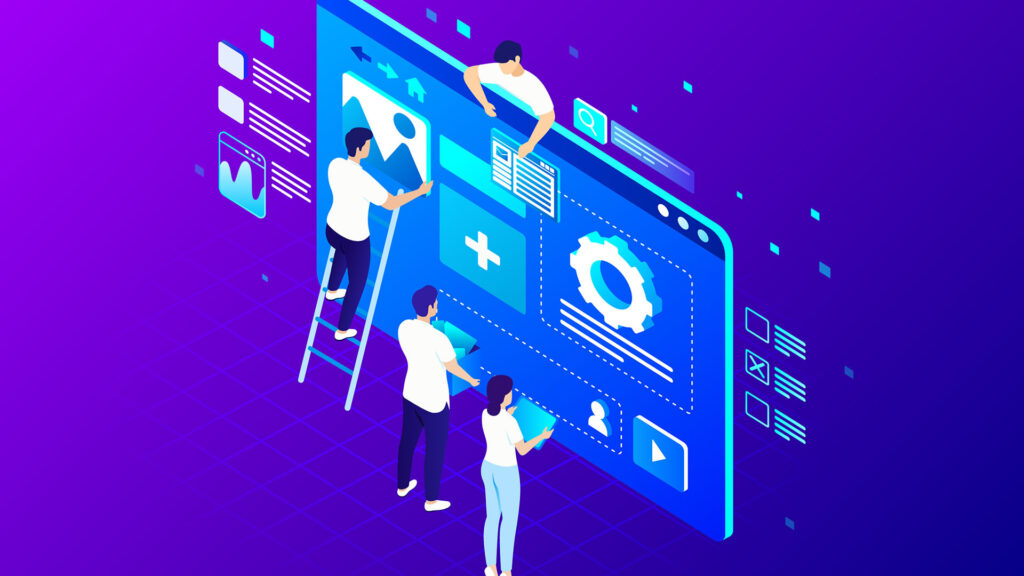


In 2026, marketing success is increasingly defined by a brand’s ability to anticipate customer intent rather than react to past behaviour. Predictive analytics has become a core capability for modern marketing teams, enabling organisations to forecast demand, personalise engagement, and optimise performance across increasingly complex customer journeys.
Powered by AI and advanced data models, predictive analytics allows marketers to identify patterns in behaviour, predict outcomes, and act with greater precision at scale.
As AI-driven platforms reshape search, content discovery, and customer engagement, predictive analytics plays a critical role in turning fragmented data into actionable insight. Rather than analysing performance in isolation, these systems continuously evaluate behavioural signals, contextual data, and historical trends to guide decisions in real time. Organisations using advanced analytics and AI-driven personalisation are significantly better positioned to improve engagement and revenue outcomes.
This shift is not simply technological – it is strategic.
Predictive analytics enables marketers to move beyond broad segmentation toward dynamic, intent-led personalisation that reflects how customers actually research, evaluate, and interact with brands. Businesses that embed AI and predictive analytics into customer-facing strategies consistently outperform peers in both personalisation effectiveness and commercial impact.
Understanding Predictive Analytics in Marketing
Predictive analytics in marketing is the practice of using historical data, real-time behavioural signals, and machine learning models to anticipate future customer actions and outcomes. It has evolved from a reporting enhancement into a strategic capability that helps organisations forecast demand, prioritise opportunities, and personalise engagement across complex, multi-touchpoint journeys.
Rather than analysing past performance in isolation, modern predictive analytics evaluates patterns across channels, including search behaviour, content interaction, CRM activity, and transactional data, to identify likely next actions.
This enables marketers to shift from reactive optimisation to proactive decision-making, improving accuracy in areas such as targeting, messaging, and budget allocation.
AI plays a central role in this evolution.
Advanced models can process large volumes of structured and unstructured data to surface intent signals that are difficult to detect through traditional analysis. Predictive analytics allows marketing teams to move beyond descriptive insights toward foresight-driven strategies that improve relevance and performance at scale.
The value of predictive analytics is closely tied to its application in customer engagement.
AI-driven systems continuously learn from user behaviour across digital touchpoints, enabling dynamic personalisation that reflects context, timing, and likelihood to convert.

The Role of AI and Big Data in Personalization
Personalisation in marketing is driven by the convergence of artificial intelligence and large-scale behavioural data.
AI no longer supports personalisation as a layer added after campaign planning, it actively shapes how audiences are segmented, how experiences are delivered, and how performance is optimised in real time.
Big data provides the raw behavioural signals that modern personalisation depends on, including interaction patterns across websites, mobile apps, CRM systems, and digital touchpoints. AI systems analyse this data continuously to identify intent, predict preferences, and determine the most effective content, channel, and timing for each interaction.
According to IBM, AI-enabled data analysis allows organisations to move from rule-based personalisation to adaptive experiences that respond dynamically to user behaviour. Unlike earlier, personalisation approaches that relied on static attributes, AI-driven models in 2026 evaluate context and momentum.
For example, changes in browsing depth, content sequence, or engagement frequency can signal shifts in intent,
prompting systems to adjust messaging or offers automatically. Businesses using real-time, AI-led personalisation see stronger engagement and more consistent customer experiences across channels.
This evolution has expanded personalisation beyond recommendations alone. Predictive models now influence content prioritisation, journey orchestration, and communication timing. Salesforce notes that high-performing marketing teams are increasingly using AI to personalise not just what customers see, but also when and how they engage, thereby improving relevance without increasing message volume.
The competitive advantage lies not in data volume, but in interpretation and application.
Organisations that combine AI with disciplined data governance and clear experience design principles are able to deliver personalisation that feels contextual rather than intrusive, strengthening engagement while supporting measurable performance outcomes.
MUM also overcomes a longstanding limitation in global search by reducing dependence on language-specific content.
Its multilingual understanding allows it to interpret and synthesise information across languages, surfacing insights that may not rank or appear in traditional, language-bound search results. For businesses operating across regions, this fundamentally changes how international audiences discover content, making semantic relevance more important than localisation alone.
Is Your CRM Strategy Target Audience Focused?
Explore Aweb Digital’s CRM Automate Solutions to streamline operations, boost efficiency, and enhance customer engagement. Leverage the latest technology to drive your business forward in 2026.
Benefits of Predictive Analytics for Marketing in 2026
Improved Campaign Efficiency
Predictive analytics improves campaign efficiency by shifting marketing from broad execution to precision-led decision-making. Instead of launching campaigns based on assumptions or historical averages, marketers can prioritise audiences, channels, and messages based on likelihood to engage or convert.
Predictive models help identify where effort will have the greatest impact, enabling teams to allocate budgets more intelligently and reduce waste. As performance signals update in real time, campaigns can be adjusted proactively, ensuring optimisation happens before spend is exhausted, not after results decline.
Enhanced Customer Engagement
Predictive analytics enhances customer engagement by aligning interactions with intent and context rather than static segmentation. Engagement is driven by relevance, when content, timing, and channel selection reflect where a customer is in their decision process.
By analysing behavioural patterns across touchpoints, predictive systems help marketers personalise journeys dynamically.
This includes tailoring messaging depth, sequencing content, and determining when to escalate from automated interaction to human outreach. The result is engagement that feels timely and useful, rather than repetitive or intrusive.
Predictive insight allows brands to respond to emerging needs, not just expressed ones, strengthening trust and increasing the likelihood of meaningful action.
Boosted Revenue Generation
Predictive analytics contributes directly to revenue growth by improving both conversion efficiency and opportunity identification. By forecasting purchase likelihood and deal progression, marketers can support sales teams with higher-quality leads and clearer prioritisation.
Beyond acquisition, predictive models help uncover expansion opportunities by identifying patterns associated with upsell readiness, cross-sell potential, or churn risk. This allows organisations to maximise customer lifetime value through more informed engagement strategies. Salesforce highlights that companies applying predictive intelligence across marketing and sales see stronger conversion performance and more consistent revenue outcomes.
Crucially, predictive analytics elevates decision-making across the marketing function.
In 2026, success largely depends on acting ahead of outcomes using probability, not instinct, to guide strategy.
As predictive capabilities mature, they enable marketers to connect performance optimisation, customer engagement, and revenue impact into a single, measurable system.

Suggested reading:
Optimise Your B2B and B2C SEO Strategy for 2025: Google Gemini’s Role in Shaping Search Results
Tools and Techniques for Predictive Marketing
Best Tools for Predictive Analytics in Customer Engagement
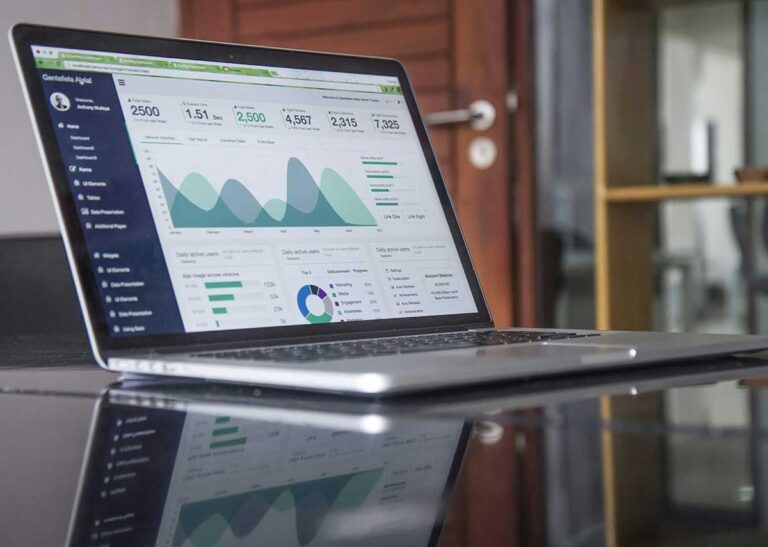
Predictive marketing tools are evaluated less by individual features and more by how effectively they translate data into decisions. Leading platforms combine machine learning, real-time analytics, and native integration across marketing and sales systems to support intent-driven engagement at scale.
Platforms such as Salesforce Einstein, and HubSpot embed predictive capabilities directly into CRM and marketing workflows, enabling teams to prioritise leads, personalise outreach, and forecast outcomes without relying on disconnected analytics layers. These systems continuously learn from customer behaviour, allowing strategies to adapt as intent signals evolve.
Data harmonisation platforms like Adverity, play a complementary role by unifying data across channels.
By consolidating inputs from paid media, content, CRM, and analytics tools, they improve the accuracy and reliability of predictive models a critical requirement as data ecosystems become more fragmented.
Integrating Predictive Tools in Marketing
The effectiveness of predictive analytics depends on how well it is integrated into existing marketing operations.
In 2026, integration is considered operational. Predictive insights must surface where decisions are made, whether that is campaign planning, lead routing, or content prioritisation.
Successful integration begins with identifying the decisions predictive analytics is meant to improve, such as lead prioritisation, message sequencing, or budget allocation. Tools should then be aligned to ingest the relevant data sources and feed insights directly into execution systems. When predictive outputs are embedded into day-to-day workflows, teams can act on them quickly rather than treating analytics as a separate reporting layer.
Cross-channel compatibility is also essential. Predictive systems must function consistently across email, paid media, content platforms, and CRM environments to support coherent, intent-led engagement.
Actionable Guidance for Using Predictive Analytics in 2026
To apply predictive analytics effectively in 2026, marketers should focus on execution discipline rather than model complexity:
- Continuously validate predictive outputs against real outcomes to ensure models remain accurate as behaviour changes
- Use predictive insights to guide prioritisation and timing, not just personalisation
- Treat predictive analytics as an evolving capability, refining models as new data sources and signals emerge
When applied with clarity and intent, predictive analytics becomes a decision-support system rather than a forecasting exercise. The value lies not in predicting everything, but in predicting what matters most, enabling marketing teams to act earlier, allocate resources more effectively, and align engagement with real customer intent.
Boost Your Marketing Efficiency
Explore Aweb Automate’s Marketing Automation Services to streamline campaigns, enhance personalization, and drive growth.

Adopting Predictive Analytics - Challenges and How to Overcome Them
Data Silos: A Barrier to Effective Predictive Analytics
One of the most persistent obstacles to effective predictive analytics is fragmented data. When customer information is distributed across disconnected platforms such as CRM, marketing automation, analytics tools, and sales systems predictive models lack the context required to generate reliable insight.
In 2026, predictive accuracy depends on continuity across the customer journey.
Disconnected data limits visibility into intent, behaviour, and progression, reducing predictive models to partial forecasts rather than actionable guidance.
How to Overcome it:
Organisations must prioritise data integration over data expansion.
Establishing a unified data layer, whether through customer data platforms, integration middleware, or well-governed data pipelines enables predictive systems to operate on complete, consistent inputs and deliver insights that can be acted on with confidence.
Skill Gaps: A Roadblock to Effective Implementation
Predictive analytics adoption often stalls due to capability gaps rather than technology limitations. While modern platforms abstract much of the technical complexity, teams still need the ability to interpret outputs, validate models, and translate predictions into strategic decisions.
In 2026, the challenge is less about building models from scratch and more about operationalising insight knowing when to trust predictions, how to act on them, and where human judgement remains essential.
How to Overcome it:
Organisations should focus on enablement, not just tooling. This includes upskilling marketing and revenue teams to work with predictive outputs, establishing shared interpretation frameworks, and supplementing internal capability through specialist partners when needed. Predictive analytics delivers value only when insight is embedded into decision-making processes.
Technology Costs: Overcoming Financial Barriers
Cost is often perceived as a barrier to predictive analytics adoption, particularly for organisations wary of long-term technology commitments. However, in 2026, the greater risk lies in underutilisation rather than access, investing in tools without a clear application strategy.
Modern predictive analytics platforms are increasingly modular and cloud-based, allowing organisations to scale usage based on maturity and business need rather than upfront infrastructure investment.
How to Overcome it:
The most effective approach is to align investment with specific outcomes. By starting with clearly defined use cases such as lead prioritisation or churn prediction, organisations can demonstrate value incrementally, justify expansion, and avoid unnecessary spend. Predictive analytics should be adopted as a staged capability, not a one-time technology purchase.

Suggested reading:
Why WordPress and Shopify Are the Best CMS Choices for 2025: A Comparison for Business Growth

Future Directions for Predictive Analytics and Marketing Strategy
Advancements in AI and Their Integration into Predictive Tools
In 2026, the most meaningful advancements in AI are not about faster algorithms, but about deeper integration into marketing decision systems. Predictive tools are increasingly embedded directly into planning, execution, and optimisation workflows, reducing the gap between insight and action.
Rather than generating standalone predictions, AI-driven systems now support continuous learning, adjusting forecasts as customer behaviour shifts across channels and contexts. This enables marketers to respond to emerging intent signals in near real time, improving relevance without increasing operational complexity.
The result is a move away from campaign-based prediction toward always-on, adaptive marketing strategies that evolve alongside customer behaviour.
The Evolution of Data-Driven Insight in 2026
Data-driven insight has expanded beyond transactional analysis into contextual understanding.
Predictive models increasingly incorporate behavioural momentum, interaction sequences, and engagement patterns rather than relying solely on historical outcomes.
Modern analytics platforms are designed to surface decision-ready insights, not just trends.
Instead of dashboards that require interpretation, predictive systems now provide guidance on what action to take, when to take it, and where it will have the greatest impact.
This shift enables marketers to operate with greater confidence in complex environments, using predictive insight to prioritise effort, align teams, and act earlier in the customer journey.
Staying Ahead with Evolving Predictive Marketing Strategies
Staying ahead in 2026 requires treating predictive analytics as a strategic capability rather than a tactical enhancement.
As customer journeys become less linear and more self-directed, marketing strategies must evolve from reactive optimisation to anticipatory engagement.
High-performing organisations use predictive insight to identify opportunity before demand is explicit, adjusting messaging, channel mix, and investment based on probability rather than hindsight. This allows teams to remain agile without sacrificing consistency or focus.
The organisations that lead will be those that continuously refine how predictive insight informs planning, execution, and measurement across the marketing function.
Building Future-Ready Marketing with Predictive Analytics
Predictive analytics is no longer an emerging concept, as it has become a foundational capability for marketing teams operating in 2026. As accountability increases and customer behaviour becomes harder to interpret through traditional metrics alone, the ability to anticipate outcomes has become essential.
When applied with discipline, predictive analytics strengthens every stage of the marketing lifecycle, from prioritisation and personalisation to performance optimisation and revenue impact.
The value lies not in prediction itself, but in how insight is translated into timely, informed action.
Organisations that invest in predictive analytics as a long-term capability, supported by strong data practices, clear decision frameworks, and cross-functional alignment, will be better positioned to adapt, compete, and grow. In an environment defined by change, predictive insight is what enables marketing to move forward with clarity rather than uncertainty.
Assess your data readiness, identify high-impact use cases, and operationalise predictive insight across marketing and revenue teams.