



We’ve seen it happen countless times: brilliant e-commerce businesses pouring thousands into paid ads while their organic search potential sits completely untapped.
The reality?
Poor ecommerce seo costs online retailers millions in lost revenue every year.
But here’s what gets us excited: when done right, the results are extraordinary. Take VIM & VIGR, who achieved a 404% increase in organic search traffic following comprehensive SEO work. Or consider Bleuet’s remarkable 5,107% increase in individual users after implementing proper optimization strategies. Even more impressive, Clario achieved 534,000 organic sessions and 6,500 conversions starting from zero.
We’re sharing our complete ecommerce seo implementation framework – the same systematic approach that’s helped many online stores transform their organic visibility. This isn’t another generic guide; it’s a battle-tested methodology that addresses the 8 most critical pain points causing e-commerce sites to hemorrhage potential customers.
Understanding the Ecommerce SEO Challenge
Here’s the truth about ecommerce seo strategies: traditional SEO approaches fall flat when you’re dealing with thousands of products, complex site structures, and constantly changing inventory. We’ve worked with enough online stores to know that what works for content sites often backfires spectacularly for e-commerce.
The complexity of e-commerce site structures creates unique challenges. You’re dealing with deep category hierarchies, overwhelming navigation menus, and faceted search systems that can generate thousands of URL combinations. It’s like trying to organize a library where books keep moving and new sections appear daily.
Technical seo for ecommerce becomes even trickier when you factor in duplicate content issues. Most product descriptions come straight from manufacturers, meaning your “unique” content appears on dozens of competitor sites. We’ve seen entire product catalogs get penalized because store owners didn’t realize they were essentially republishing the same content everyone else was using.
The Cost of Poor Ecommerce SEO
The business impact of these mistakes isn’t theoretical – it’s devastating. Poor organic visibility directly translates to lost revenue, especially when you consider that organic search drives the highest-converting traffic for most e-commerce sites.
Mobile optimization neglect compounds these problems. With mobile commerce accounting for over 50% of online sales, sites that don’t prioritize mobile experience aren’t just losing rankings – they’re losing customers at the exact moment they’re ready to buy.
Why Traditional SEO Fails for Ecommerce
Content sites can get away with basic SEO fundamentals, but e-commerce platforms need specialized approaches. Product page seo requires balancing keyword optimization with conversion-focused copy, while maintaining unique content across potentially thousands of similar products.
Technical SEO errors hit e-commerce sites harder too. Crawling and indexing issues that might slightly impact a blog can completely hide entire product categories from search engines. We’ve seen stores lose 60% of their organic traffic overnight because of poorly implemented site migrations or server configuration problems.
Keyword stuffing becomes tempting when you’re trying to optimize hundreds of product pages, but it results in unreadable content that neither users nor search engines appreciate. The key is finding that sweet spot between optimization and usability.

Suggested reading:
Adaptive Web Design: Scalable, User-Centric Websites for Conversion on Every Device
Technical SEO Foundation - Building Your Ecommerce Architecture
Your site’s architecture is the foundation everything else builds on.
Get this wrong, and even perfect product pages won’t save you.
We always start with ecommerce site structure best practices because they determine whether search engines can efficiently discover and understand your content.
This comprehensive guide to optimizing website architecture for SEO provides detailed technical guidance, but here’s what we focus on first: simplifying navigation and creating logical hierarchies that make sense to both users and crawlers.

Mastering Site Architecture for Large Catalogs
The 3-5 click rule isn’t just user experience advice – it’s crawl efficiency strategy. When products are buried six levels deep, search engines often won’t find them, and users definitely won’t stick around long enough to discover them.
We recommend organizing categories and subcategories around user intent rather than internal business logic. Your customers don’t care about your warehouse organization; they want to find products quickly and intuitively.
URL Structure and Parameter Management
Faceted navigation seo problems plague most e-commerce sites. Every filter combination creates a new URL, potentially generating millions of pages with thin or duplicate content.
The solution?
Strategic use of canonical tags and noindex directives.
For comprehensive guidance on this complex topic, check out this resource on managing faceted navigation for SEO. The key is allowing useful filter combinations to be indexed while blocking the infinite variations that waste crawl budget.
Crawl Budget Optimization
Large e-commerce sites face unique crawl budget challenges. Search engines allocate limited resources to crawling your site, so you need to guide them toward your most important pages. This means fixing technical issues like broken links, optimizing your XML sitemaps, and ensuring your most valuable pages are easily discoverable.
Is your website prepared to rise in search rankings?
With smart keyword research, optimized copy, and content frameworks that engage, you can attract the right traffic and turn visitors into leads. From meta-tags to blog posts and landing pages, every word should work toward visibility and growth.
Product and Category Page Optimization
This is where product page seo gets interesting. Every product page needs to serve dual purposes: ranking well in search results and converting visitors into customers. We’ve found that the best approach focuses on user intent first, optimization second.
The comprehensive product page optimization strategies guide covers advanced techniques, but we always start with the basics: unique, detailed descriptions that address real customer questions and concerns.
Writing Unique Product Descriptions That Rank
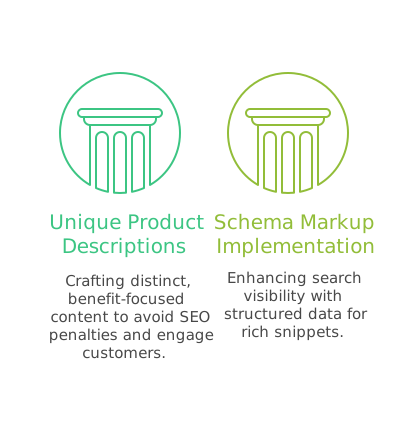
Duplicate product descriptions are SEO poison, but writing unique content for thousands of products seems impossible.
Here’s our approach: prioritize your top-selling and highest-margin products for custom descriptions, then create templates that can be customized for similar products.
Focus on benefits, not just features.
Instead of “waterproof material,” write “keeps your feet dry during unexpected downpours.” This approach naturally incorporates long-tail keywords while creating genuinely helpful content.
Schema Markup for Rich Product Results
Structured data implementation can dramatically improve your search visibility. Product schema markup enables rich snippets showing prices, availability, and review stars directly in search results. For detailed implementation guidance, see this schema markup resource for product pages.
The key is implementing schema consistently across all product pages and keeping it updated as prices and availability change.
Category Page Content Strategy
Category page seo requires balancing helpful content with product focus. We recommend adding 200-400 words of category-specific content that explains what makes products in this category special and helps users understand their options.
Use keyword clustering to organize content logically around related terms and user intent. This approach helps category pages rank for broader terms while supporting individual product pages.

Suggested reading:
Conversion Rate in Digital Marketing: Techniques for Maximizing ROI in Multichannel Campaigns
Mobile-First Optimization and Core Web Vitals
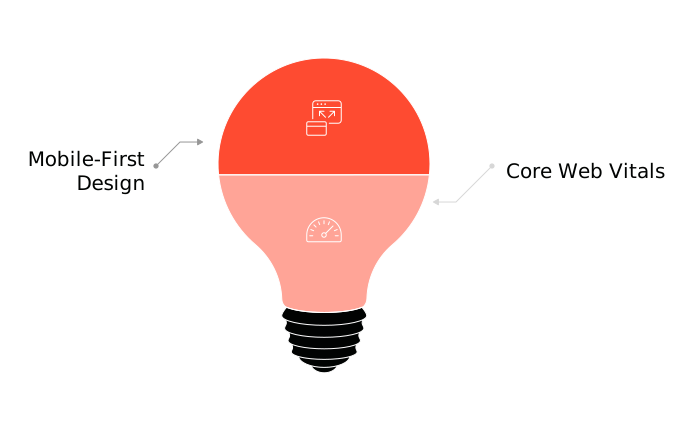
Mobile optimization isn’t optional anymore – it’s table stakes. Mobile ecommerce seo optimization directly impacts both rankings and conversions, especially since Google’s mobile-first indexing means your mobile site performance determines your search visibility.
The Core Web Vitals performance guide provides technical details, but here’s what matters most for e-commerce: loading speed, visual stability, and smooth interactions throughout the purchase process.
Mobile-First Design for Ecommerce
Responsive design goes beyond making your site look good on phones. It’s about creating mobile experiences that guide users seamlessly from discovery to purchase. This means optimizing touch targets, simplifying navigation, and ensuring checkout processes work flawlessly on small screens.
Design with the 3-5 click rule in mind, but make those clicks obvious and easy to execute on mobile devices.
Core Web Vitals Performance
Site speed directly impacts both SEO and conversions. Slow-loading product pages kill sales, while fast sites keep users engaged and search engines happy. Focus on optimizing images, minimizing code, and using content delivery networks to improve loading times globally.
Visual stability matters too – nothing frustrates mobile users more than buttons that move just as they’re trying to tap them.
Is your web content built to convert?
Engage your audience with clear, on-brand copy that addresses real needs and drives action. From homepages to case studies, our content blends storytelling, SEO, and structure to deliver measurable results.
Advanced Content Strategy and Internal Linking
Smart ecommerce internal linking strategy does more than pass authority between pages – it guides users through logical purchase journeys while helping search engines understand your site’s topical structure.
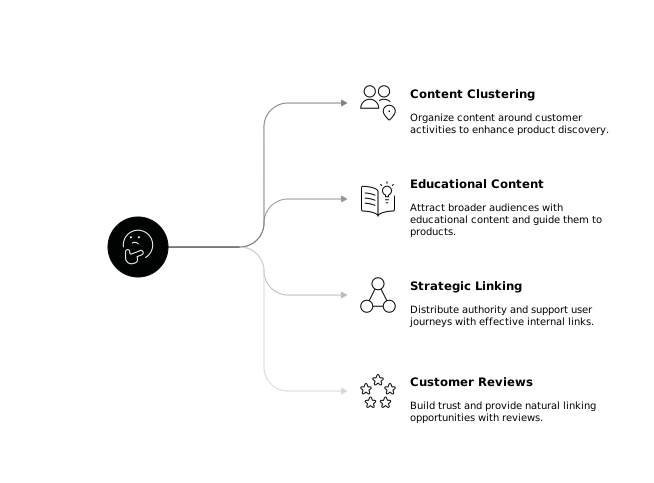
We recommend creating content clusters around product themes and user intent. This means linking related products, connecting category pages to relevant blog content, and building clear pathways from informational content to transactional pages.
Content Clustering for Product Discovery
Organize content around how customers actually think about your products. If you sell outdoor gear, cluster content around activities (hiking, camping, climbing) rather than product types (jackets, boots, backpacks).
Create educational blog content that attracts broader audiences, then guide them toward relevant products through natural, helpful internal links.
Strategic Internal Linking Systems
Build internal linking structures that distribute authority effectively while supporting user journeys. Link from high-authority pages to important product pages, connect related products, and use anchor text that helps both users and search engines understand what they’ll find.
Customer reviews and testimonials serve double duty here – they build trust while providing natural opportunities for internal links to related products.

Suggested reading:
Landing Page SEO Tips: Driving Conversions with Effective Content and UX Design
Emerging Trends in Ecommerce SEO
AI ecommerce seo tools are changing how we approach optimization at scale. Artificial intelligence can help generate product descriptions, optimize images, and even predict which products need SEO attention based on performance data.
Voice search optimization is becoming increasingly important as smart speakers proliferate. This means optimizing for conversational queries and local search terms that reflect how people actually speak.
AI and Automation in Ecommerce SEO
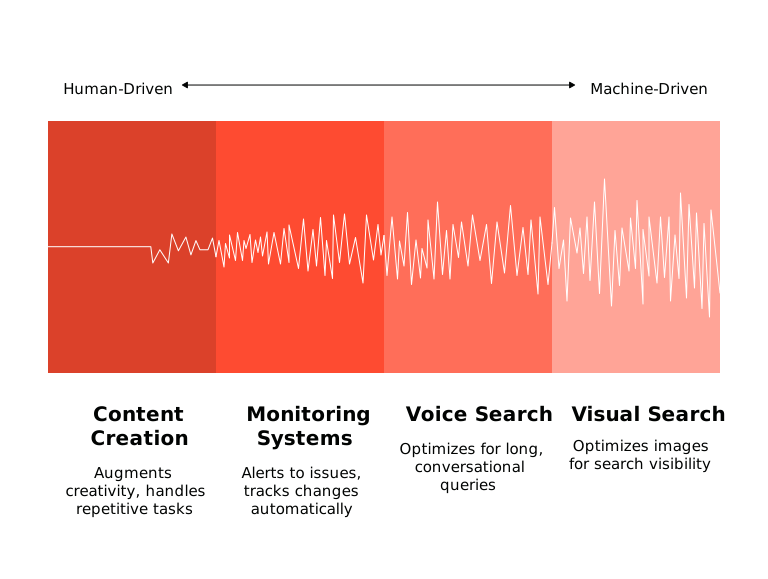
AI-powered content creation tools can help scale optimization efforts across large product catalogs. But remember – the goal isn’t to replace human creativity, it’s to handle repetitive tasks so you can focus on strategy and high-value optimizations.
Automated monitoring systems can alert you to technical issues, track ranking changes, and identify optimization opportunities across thousands of pages.
Voice and Visual Search Optimization
Voice search queries tend to be longer and more conversational. Optimize for questions like “what’s the best waterproof hiking boot under $200” rather than just “hiking boots.”
Visual search is growing rapidly, especially for fashion and home goods. Optimize product images with descriptive filenames and alt text that helps both accessibility and search visibility.
Your Ecommerce SEO Action Plan
The results speak for themselves: proper ecommerce seo implementation can transform struggling online stores into organic traffic powerhouses. We’ve seen the 404% traffic increases, the 5,000%+ user growth, and the hundreds of thousands of new organic sessions that follow systematic optimization.
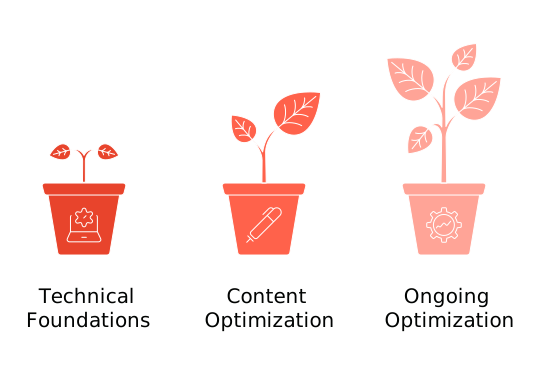
Start with technical foundations – fix crawling issues, optimize site architecture, and ensure mobile performance meets Core Web Vitals standards.
Then focus on content – unique product descriptions, helpful category pages, and strategic internal linking.
Remember, ecommerce seo isn’t a one-time project. It’s an ongoing process of optimization, monitoring, and adaptation as your catalog grows and search algorithms evolve.
Boost visibility, attract qualified customers, and retain them with proven SEO tips for ecommerce sites—build a framework that drives measurable growth.

Frequently Asked Questions
How do I handle duplicate content issues on my ecommerce site?
Focus on creating unique descriptions for your top-selling products first. Use canonical tags for similar products and implement structured data to help search engines understand product relationships.
What's the best URL structure for ecommerce websites with faceted navigation?
Keep URLs clean and logical, use canonical tags for filter combinations, and implement noindex directives for thin content pages. Allow useful filter combinations to be indexed while blocking infinite variations.
How can I optimize product pages for both SEO and conversions?
Write benefit-focused descriptions that address customer questions, implement product schema markup, include customer reviews, and ensure fast loading times across all devices.
Q: What are the most important Core Web Vitals for ecommerce sites?
Focus on Largest Contentful Paint (loading speed), Cumulative Layout Shift (visual stability), and First Input Delay (interactivity). These directly impact both search rankings and user experience.
How do I scale content creation for large product catalogs?
Prioritize high-value products for custom content, create adaptable templates for similar products, and consider AI tools for initial drafts that you can refine and personalize.